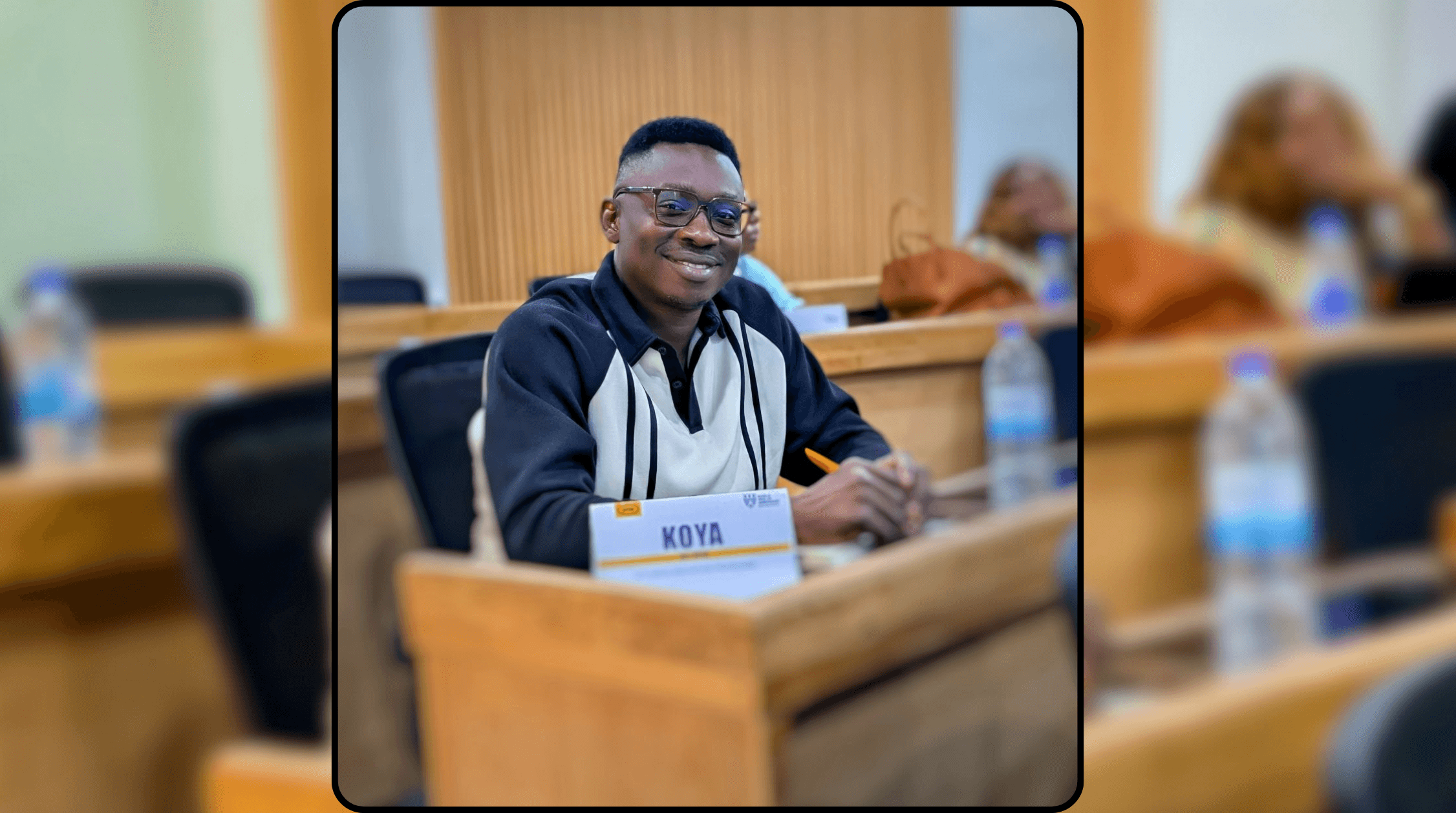
At Pan-Atlantic University’s School of Media and Communication, education is shaped not only by what happens during lectures, but also by the environment in which learning takes place.
By Oluwakoya Ipinlaiye
AI and Digital Innovation Lead, IBST Limited
MTN MIP5 Fellow
When we evaluate an educational institution, we usually begin with its curriculum.
We ask what courses are offered, who teaches them, what qualifications are awarded and whether the programme can improve a learner’s career.
These are important questions. But they do not tell the whole story.
Education is also influenced by the environment in which it happens: the classroom in which a difficult subject is explained, the quiet corner where an idea finally becomes clear, the meal shared during a thoughtful conversation and the atmosphere that allows learners to temporarily step away from professional pressure and concentrate.
During my time at the School of Media and Communication at Pan-Atlantic University, as a fellow of the MTN Media Innovation Programme, I began to notice this other dimension of education.
The formal curriculum was visible. It existed in the lectures, presentations, assignments and scheduled activities. But another curriculum was operating alongside it, one expressed through the quality of the environment, the organisation of the programme, the standard of the facilities and the interactions among professionals from different parts of the media industry.
It was an education delivered not only through instruction, but through experience.
Education begins before the lecture
The learning experience at SMC does not begin when a lecturer displays the first presentation slide.
It begins with arrival.
The well-planned surroundings, beautiful buildings and carefully maintained environment create an immediate sense of order. There is a noticeable difference between entering a place where learning has merely been accommodated and entering one where learning appears to have been deliberately considered.
This distinction matters.
Media professionals often work in demanding environments shaped by deadlines, constant information, unpredictable events and the pressure to produce. Journalists move from one developing story to another. Producers manage people, time and limited resources. Broadcasters work within strict schedules. Communication professionals must respond quickly to changing public conversations.
It can be difficult to think deeply when one is constantly reacting.
A conducive learning environment provides a temporary interruption to that pressure. It permits professionals to slow down, listen carefully, challenge familiar assumptions and consider their work from a wider perspective.
The serenity of the Pan-Atlantic University campus contributes to this experience. Its architecture, landscaping and atmosphere do not teach in the conventional sense, but they create the conditions in which serious learning can take place.
The environment does not replace the lecturer. It prepares the mind to receive what the lecturer has to offer.
Comfort is not the opposite of serious learning
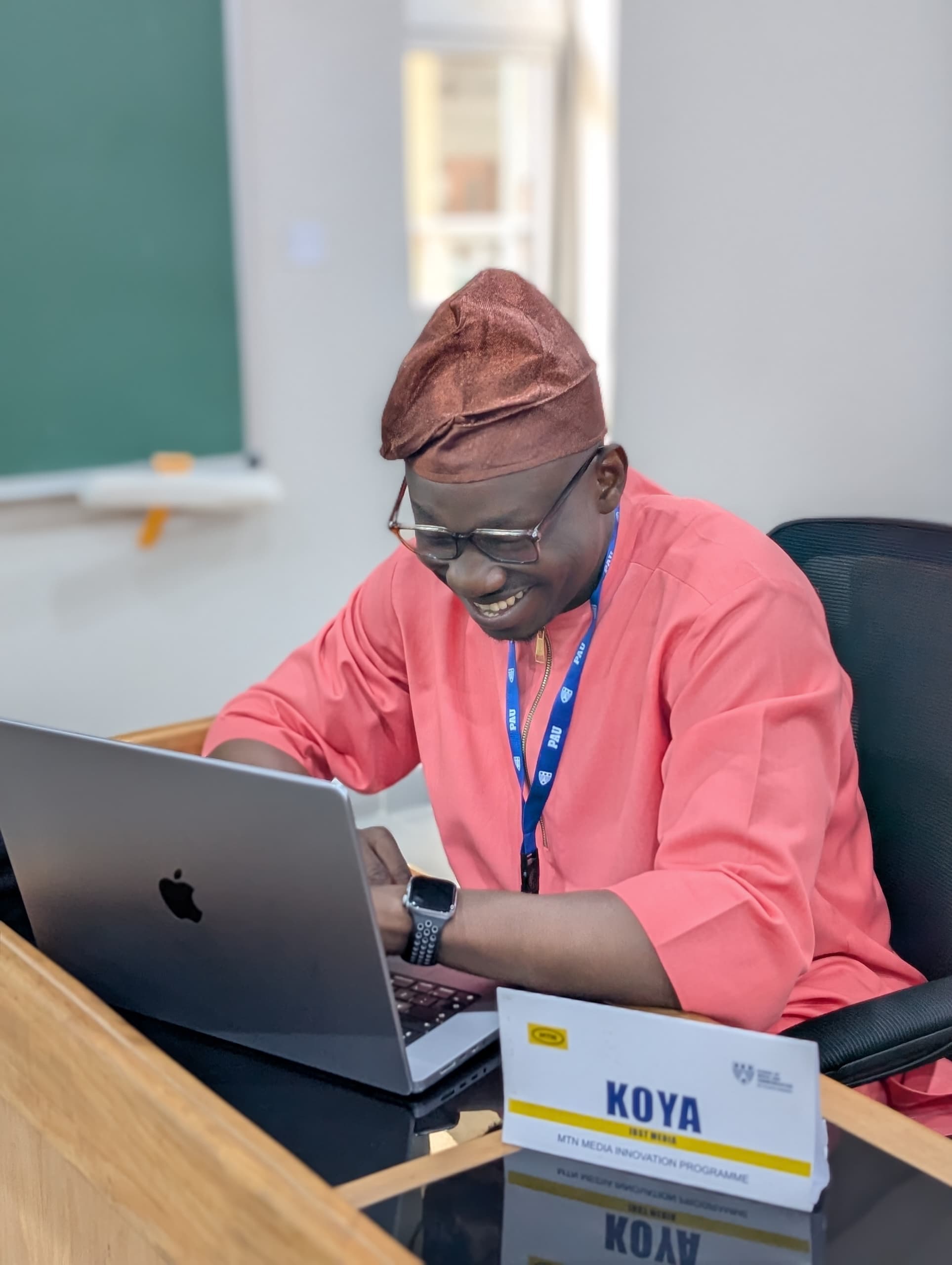
There can sometimes be an assumption that comfort is secondary to education, or even that difficult conditions somehow make learning more rigorous.
But avoidable discomfort rarely produces better thinking. More often, it competes for the learner’s attention.
A well-kept, air-conditioned classroom may appear to be a basic facility, but its educational value becomes clearer when considered from the learner’s perspective. A comfortable room allows participants to remain attentive during demanding sessions. Good seating supports long periods of discussion. Reliable infrastructure prevents minor disruptions from repeatedly interrupting the learning process.
Clean, organised and properly maintained spaces also communicate something about institutional standards.
They tell learners that preparation matters. They suggest that details deserve attention. They demonstrate that the quality of an experience is shaped by many small decisions working together.
This is particularly relevant to media professionals. Audiences may not consciously identify every production decision behind a successful programme, film, broadcast or digital experience, but they feel the combined result. Lighting, sound, pacing, design, organisation and technical reliability all contribute to their perception of quality.
In the same way, the educational experience at SMC is not created by one spectacular element. It emerges from the consistency of the entire environment.
The classroom works. The surroundings are maintained. Sessions are organised. Learners are comfortable enough to concentrate. The institution’s attention to detail becomes part of the experience.
Hospitality can support intellectual community
Food may not usually appear in conversations about educational quality, but perhaps it should.
At SMC, meals and refreshments are not merely breaks between “important” activities. They become part of the rhythm of the day and, frequently, an extension of the learning experience.
A good meal allows participants to return to sessions refreshed. More importantly, shared meals create informal spaces in which professional barriers begin to disappear.
A television presenter can sit with a journalist. A filmmaker can exchange ideas with a corporate communication professional. A broadcaster can discuss an industry problem with a software engineer. A conversation that began in the classroom can continue over lunch in a more relaxed and open form.
These exchanges matter because not all learning is formal.
Some ideas require the structure of a lecture. Others emerge through conversation. A question that someone is reluctant to ask during a session may become the starting point for a valuable discussion afterwards. A disagreement between two professionals may reveal how differently their respective parts of the industry understand the same problem.
Hospitality, when thoughtfully integrated into an educational programme, supports more than physical comfort. It supports community.
The quality of the food at SMC may be one of the more immediately appreciated parts of the experience, but its deeper value lies in what happens around it: people pause, interact and learn about one another beyond their official roles.
Sometimes, education continues at the dining table.
The modern media professional needs room to think
The media industry is changing faster than many professionals have time to process.
Artificial intelligence is altering research, transcription, editing, translation, content management and production workflows. Audience behaviour continues to shift across platforms. Traditional distinctions between journalism, broadcasting, filmmaking, marketing and technology are becoming less rigid.
Professionals are expected to adapt while continuing to deliver daily work.
This creates a challenge for media education. It is no longer enough to transfer information or introduce the latest tools. Institutions must create spaces in which professionals can examine what these changes mean.
How should journalists respond to synthetic media?
How can broadcasters serve audiences whose attention is divided across multiple platforms?
What responsibilities arise when artificial intelligence participates in content creation?
How should media organisations balance speed, accuracy, technology and public trust?
What happens when software engineers, data specialists and product designers become increasingly involved in editorial and production decisions?
Questions of this scale require more than technical instruction. They require reflection, discussion and exposure to perspectives beyond one’s immediate profession.
An environment that is calm, well organised and removed from everyday workplace pressure can help make that reflection possible.
This is one of the less visible strengths of learning at SMC. The institution does not merely provide rooms in which teaching happens. It provides an atmosphere in which experienced professionals can temporarily step outside their routines and reconsider the future of their work.
Architecture can influence interaction
Buildings shape behaviour.
A rigid environment can keep people separated even when they are physically close. A thoughtfully designed environment can create opportunities for people to meet, pause and exchange ideas.
Across the Pan-Atlantic University campus, classrooms, walkways, open areas and communal spaces contribute to the social dimension of learning. Movement between sessions does not feel entirely separate from the programme. The journey from one part of the campus to another creates moments for discussion, observation and informal connection.
This is particularly important in a programme that brings together professionals from different media backgrounds.
The future of media will not be created by journalists, broadcasters, filmmakers, business leaders or technologists working independently. It will emerge from increasing collaboration between these disciplines.
As a software engineer working in media innovation, I experience this directly.
My professional instinct is often to examine systems, workflows, automation and user experience. A journalist may begin with verification and the public interest. A filmmaker may think about narrative and emotion. A business leader may consider sustainability and scale.
When these perspectives occupy the same learning environment, every participant gains access to a wider interpretation of the industry.
The facilities support learning, but the people activate them.
World-class education is an ecosystem
The phrase “world-class” is frequently used in education, sometimes so loosely that it loses meaning.
A world-class institution should not be defined by beautiful buildings alone. It should not be determined only by reputation, technology or the credentials of its faculty.
It should be understood as an ecosystem.
That ecosystem includes the quality of instruction, the relevance of the curriculum, the diversity of the learning community and the standards reflected in the physical environment. It includes how learners are received, how effectively sessions are organised, how facilities are maintained and whether participants are given the conditions required to do their best thinking.
By this more complete definition, SMC demonstrates what world-class learning can feel like.
The beauty of the buildings attracts attention, but the deeper impression comes from consistency. The classrooms, surroundings, hospitality and academic experience feel connected rather than accidental.
The result is not simply an attractive campus. It is an environment that treats learning as a complete experience.
This matters because institutional standards can influence personal standards.
When professionals repeatedly encounter care, order, preparation and attention to detail, they are also invited to reconsider the quality of the work they produce for others.
A broadcaster may think differently about the audience experience. A producer may become more attentive to production conditions. A communication professional may reconsider how people encounter an organisation. A technology professional may reflect on whether a functional system is also a thoughtful one.
The environment becomes a quiet demonstration of what excellence requires.
The classroom is only one part of the curriculum
None of this reduces the importance of academic content.
Excellent facilities cannot compensate for an irrelevant curriculum. Beautiful buildings cannot replace capable lecturers. Good food cannot transform a programme that does not challenge its participants.
But the reverse is also true.
Strong teaching can be weakened by environments that make sustained attention difficult. Important conversations can be limited by spaces that discourage interaction. Ambitious programmes can lose some of their value when the participant experience is treated as an afterthought.
The most effective institutions recognise that these elements must reinforce one another.
At SMC, education is encountered through multiple layers: the formal knowledge shared by faculty, the professional experience within the cohort, the quality of the physical environment and the informal exchanges that continue beyond the classroom.
Together, these layers create something more substantial than a sequence of lectures.
They create an educational experience.
A lesson for the wider media industry
The implications extend beyond educational institutions.
Media organisations also create environments in which people are expected to think, collaborate and produce. The quality of those environments affects the quality of the work.
An organisation cannot continually demand creativity while providing no room for reflection. It cannot expect collaboration when teams operate in permanent isolation. It cannot pursue excellence while treating infrastructure, professional development and employee experience as unimportant.
The same principles visible in a thoughtfully designed educational environment apply to the workplace:
- People think better when unnecessary friction is reduced.
- Collaboration improves when environments encourage interaction.
- High standards are easier to maintain when they are visible throughout an organisation.
- Learning becomes more effective when people can connect ideas with experience.
- Innovation requires both intellectual challenge and psychological room to experiment.
For IBST, where our work intersects media production, broadcast infrastructure, video technology and artificial intelligence, these questions are increasingly important.
The future of media will depend not only on access to new technology, but also on the environments we create around the people expected to use it.
What will the learner carry away?
The true value of an institution is not limited to what a learner encounters while present. It is revealed in what that learner carries into the world afterwards.
Will the professional return to the newsroom with better questions?
Will the producer become more attentive to the conditions in which creative teams work?
Will the broadcaster understand audiences differently?
Will the business leader create more thoughtful systems?
Will the technologist build tools that respond to the realities of media professionals rather than merely demonstrating technical possibility?
My experience at the School of Media and Communication has reinforced the idea that education is larger than the content of a lecture.
It is also the quality of attention an institution makes possible. It is the standard communicated through its surroundings. It is the diversity of people brought into conversation. It is the comfort that allows the mind to remain present and the hospitality that gives relationships room to develop.
At SMC, the curriculum teaches.
The lecturers teach.
The fellows teach one another.
But in quieter and less obvious ways, the environment teaches too.
And perhaps that is one of the clearest signs of a thoughtfully designed educational institution: learning does not stop when the lecture ends.
Disclosure
This article reflects the author’s professional observations as a fellow of the MTN Media Innovation Programme at the School of Media and Communication, Pan-Atlantic University.